On Pema Chödrön, The Little Mermaid & The Allure of Mental Traps
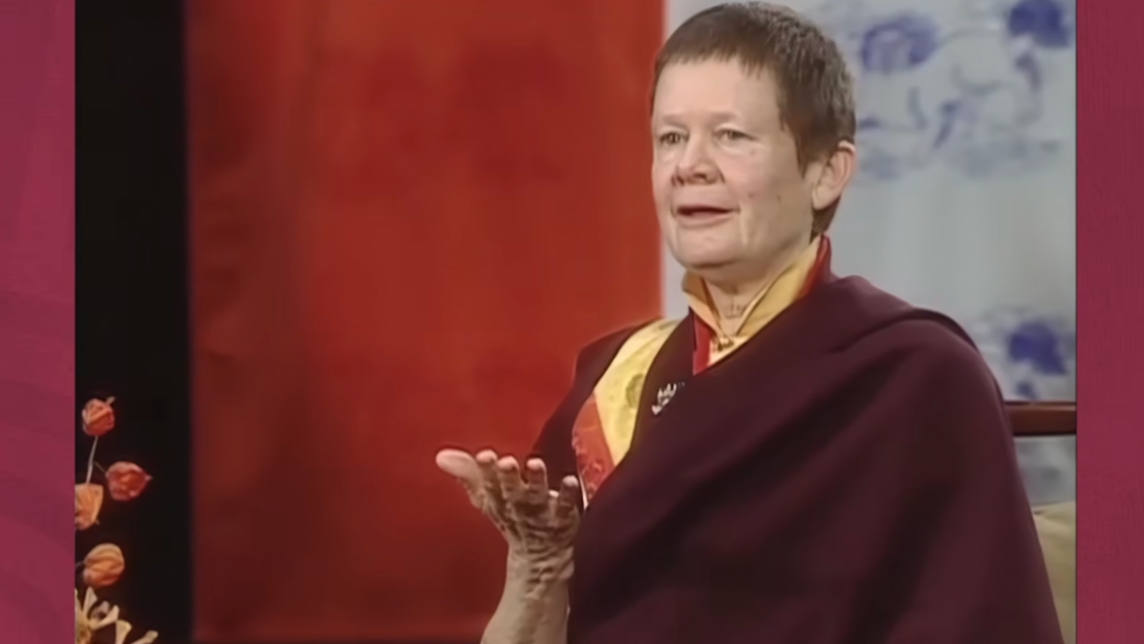
Pema Chödrön on maitrī
I was watching a clip of a talk by Pema Chödrön, who is a wonderfully serene and articulate Buddhist nun, where she was talking about ‘maitrī’, which is Sanskrit for benevolence or loving-kindness.
She was describing it in terms of the experience of the “space” where that benevolence resides, which is at a subtle point between the two extreme polarities of shame (self-criticism/guilt/self judgement) and defensiveness (rigidity in position or deflection of blame/responsibility).
As I was hearing her talk, I started going into my own experience of those places, which led me down a fascinating rabbit hole of reflection on how we tend to act & react when we view situations from within those lenses.
This “false polarity” of either shame or defensiveness, can show up in people’s work, life and consequently.. it can sometimes make an appearance in coaching sessions with clients.
Interestingly, it also happens to be one of the most fruitful areas for exploration because, when navigated with care, it can lead to some of the most transformative breakthroughs.
This is what it can look like.. a client comes in feeling stuck, frustrated or disheartened following a stressful event at work: let’s say an oversight that lead to unintended consequences.
The "False Polarity"
What tends to happen immediately after that trigger event, is that the mind instantly, loudly and over-confidently, offers a thought of what this event definitely means for us and our future. And almost always, it will have a strong directive towards one of these two familiar directions: shame.. (guilt, worry, self-criticism)… Or defensiveness… (deflection and blaming something or someone else).
The reason it works so well at velcro-ing us in is because, in that moment, these thoughts come in highly emotionally charged and they speak directly to our fight/flight/freeze wiring. This combo makes them, and us as their sensory vehicle, feel very much ‘alive.’
Their presence brings an experiential ‘high’ of sorts. Which, to our minds and nervous systems, is often quite addictive.
The trap here is that when those emotions arrive, and if they stay stuck in either the shame or defensiveness packaging, they bring with them a hidden cost. Our sense of agency.
Like Ursula’s contract with Ariel in the Little Mermaid… the price, is losing your true voice.
Both shame & defensiveness, though seemingly opposites, have a peculiarly similar underlying mechanism. They both allocate all the power from the triggering situation to somewhere or someone else... key criteria being: outside of us.
Shame makes the argument that since we’re fundamentally not good enough, we can’t be trusted to respond wisely, and so any available energy should be diverted to self-criticism & self-punishment loops.
Defensiveness on the other hand, deflects responsibility (or blame) 'out there', with something or someone else as the agent that needs to change in order for this to resolve or improve. Definitely nothing to see here, so don't even try to look.
In practice, neither shame nor defensiveness tend to solve or meaningfully move anything forward.
They do however, brilliantly manage to reinforce one thing: the mind’s unrivalled role as the irrefutable narrator of all things life. While our individual experience remains one of, as Iggy Pop would put it… “I am a passenger… and I ride and I ride…”
Within this mental narrative we are stuck in a moving vehicle that is forever at the mercy of circumstances, other people and/or our mind’s latest whim.
Side note: There is also incredible beauty in being a fully present passenger.. but that’s not usually what’s going on from the shame/defensive seats.
The Breakthrough
So where does the breakthrough happen? First, this mechanism must be witnessed clearly and thoughroughly. This usually includes a very present acknowledegent of the emotions that made themselves known during the process, which also happen to be very helpful signals for unresolved inner 'knots'.
Then we create the conditions for the noise and mental storm to be still, even if just for a moment. And then.. the person's nervous system can reach a point, when it is relaxed enough to be able finally say Ok.. (it's in The Passenger song too as almost a throwaway line one one of the final verses) “let’s take a ride and see what’s mine.”
It’s in this space where the magic happens. Any coaches reading this will know this instant viscerally because it’s one of the most fulfilling moments we get to be a part of in this line of work.
In the room, it might feel like a moment of stillness… a pause.. where there’s no criticising and no defending. A gentle experience of maitrī’, if you will. An unnasuming, open and fairly undramatic and honest look at what’s happened, what of this is actually mine, and what is needed now.
This is often where an inner sigh of release may happen. The heaviness the client came in with may even start to ease off. And a calm, grounded stillness settles in its place.
When we are able to see ourselves both honestly and compassionately, which sometimes happens more easily in the presence of a fellow witnessing, and unjudgemental nervous system, we become far more capable of recognising what really is and isn’t ours to own in a situation. We are then able to respond from a more genuine place and can finally move forward with meaningful action.
If the above resonates, or if you have your own reflections on any of the above, I’d love to hear them too. Feel free to share them in the comments or send me a message.
If you’d like to explore working together simply DM me or book a time to chat.
